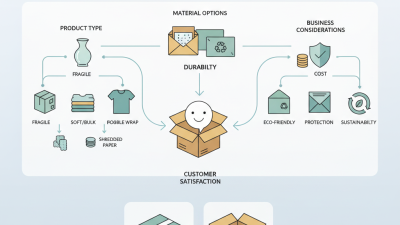
For global buyers, delivery packaging is more than a protective outer layer. It is the first physical evidence of a seller’s reliability. A carton may travel through warehouses, ports, conveyors, and rain before reaching a customer’s door. During that journey, weak seals, poor cushioning, or unclear labels can create expensive problems.
Packaging educator and author Walter Soroka describes packaging as “the science, art, and technology of enclosing and protecting products for distribution, storage, sale, and use.” His definition explains why delivery packaging requires both technical control and practical judgment. A well-designed package should match the product’s weight, fragility, dimensions, and transport conditions. It should also open cleanly, reduce unnecessary material, and protect the buyer’s experience.
Small details matter. A double-wall carton can help protect a glass component. A fitted insert can prevent movement inside the box. Moisture-resistant materials may matter during long ocean routes. Clear handling information can reduce confusion at busy distribution centers. These decisions also support consistency across international orders.
Yet packaging is never perfect. A heavier box may improve protection but increase shipping costs and emissions. A lighter design may save material but fail under rough handling. This tension deserves honest testing, not confident assumptions. Global buyers notice both damage and waste. The strongest delivery packaging strategy therefore combines testing, supplier experience, product knowledge, and continuous review. It protects what arrives, how it arrives, and what the shipment says about the business behind it.

Delivery packaging in global trade is the complete protective system used from dispatch to final delivery. It includes cartons, pallets, cushioning, moisture barriers, strapping, labels, and handling instructions. Unlike retail packaging, it must survive loading, long-distance transport, warehouse storage, and repeated movement. Every layer has a job. The outer carton resists pressure, while internal materials limit shifting and impact.
Good packaging begins with the product’s real shipping conditions. A glass component needs shock absorption and firm separation. Metal parts may require moisture protection to reduce corrosion. Heavy goods need balanced weight distribution and strong pallet support. Packaging teams commonly evaluate drop, vibration, compression, and humidity risks before approving a design. However, laboratory tests cannot reproduce every route perfectly. An unexpected transfer or rough warehouse floor can still expose weaknesses.
Global buyers also examine dimensions, weight, recyclability, and labeling clarity. Oversized packaging can increase freight costs and handling damage. Excessive materials may create disposal concerns at the destination. Poor labels can delay inspection or cause incorrect handling, even when the product itself is compliant. Packaging should match carrier requirements and destination rules, while export documents remain a separate responsibility. In practice, small details matter: dry corners, tight straps, readable marks, and an accessible inspection point. A design that looks efficient on paper may become inconvenient during unpacking. Feedback from warehouses and buyers should reshape it.

International shipping exposes packages to vibration, compression, drops, humidity, and sudden temperature changes.
A carton may travel through trucks, aircraft, warehouses, and unfamiliar sorting systems. UNCTAD’s Digital Economy Report 2021 recorded global e-commerce sales of about 26.7 trillion dollars in 2019. More online orders mean more complex delivery journeys.
Good packaging creates a controlled barrier around the product.
Corrugated walls absorb impact, while molded inserts prevent movement inside the box. Void fill should hold the item firmly without applying pressure to fragile surfaces.
Moisture-resistant layers help protect goods during rain, condensation, and coastal transport. Air needs room. Overfilled boxes can burst when stacked.
Testing should reflect the actual route, not an ideal one.
The International Safe Transit Association’s 2024 guidance emphasizes drop, vibration, compression, and atmospheric testing for packaged products.
A practical trial might include repeated corner drops and several hours of vibration. Edges matter. Yet packaging teams sometimes test only one box size, which leaves a serious blind spot.
Larger cartons may collapse under stacked weight, even when smaller samples pass.
Temperature-sensitive products require additional monitoring and insulation.
The World Health Organization’s Technical Report Series guidance stresses validated temperature-control methods for sensitive goods.
Labels help, but labels cannot repair weak packaging. A sealed carton, stable internal cushioning, and documented test results give global buyers stronger protection and clearer accountability.
For global delivery, packaging must survive more than a warehouse shelf. It may face rain, dry air, rough transfers, and long storage. Corrugated fiberboard works well for many products because it is light, stackable, and widely recyclable. Choose a stronger grade for heavy items or extended routes. A thin box can save material, but one crushed corner can ruin the entire shipment.
Moisture-sensitive goods need extra protection. Water-resistant coatings, sealed inner bags, or desiccant packets can reduce damage when used appropriately. Molded pulp inserts suit many fragile products and create a cleaner unboxing experience. For highly delicate items, layered cushioning is safer than one thick sheet. Air pillows save space, yet they may offer limited protection against sharp edges and repeated compression. Test this carefully.
Good design also reduces movement inside the carton. Leave little empty space, but allow enough cushioning around corners. Use clear handling information, readable labels, and a simple opening structure. Packaging should fit common shipping dimensions without becoming difficult to carry. In practical trials, small changes often matter: stronger tape, rounded internal edges, or a tighter insert. No design is perfect. A package that works in a dry test room may fail during a humid sea journey. Review drop tests, vibration results, customer feedback, and destination requirements before wider distribution.
Packaging affects customs clearance, landed cost, and environmental performance long before a parcel reaches the buyer. In warehouse reviews, I have seen cartons delayed because product descriptions were vague or packing lists missed net weights. Clear labels, accurate quantities, and consistent dimensions help customs officers verify shipments faster. The packaging itself must also match the declared goods. A box that looks oversized can invite extra inspection or dimensional shipping charges. Small errors become expensive.
Cost matters beyond postage. Strong inner protection can reduce breakage, replacements, and customer complaints. However, adding several layers is not always safer. Excess foam increases volume, handling fees, and disposal pressure. Packaging engineers should test drop resistance, moisture exposure, and stacking weight for the actual route. A practical trial with one shipment often reveals weaknesses that laboratory assumptions miss.
Sustainability requires careful judgment. Recyclable paper may perform poorly in humid transport, while durable packaging can support reuse. Material claims should be verified, not printed casually. Buyers should ask for packaging specifications, recycled-content evidence, and disposal guidance for their destination market. I have also found that “eco-friendly” designs sometimes use mixed materials that local recyclers cannot separate. That is an uncomfortable gap. Better packaging reduces damage while using only the protection the journey genuinely needs.
Global buyers should evaluate delivery packaging as a tested system, not as a attractive box. The OECD’s Global Plastics Outlook reports that packaging created about 40% of global plastic waste in 2019. UNEP also estimates that municipal waste may rise from 2.3 billion tonnes in 2023 to 3.8 billion tonnes by 2050. These figures make material efficiency important, but protection still comes first. Buyers should review compression, drop, vibration, moisture, sealing, and dimensional-weight performance. ISTA 3A or ASTM D4169 testing can provide useful evidence for parcel and distribution conditions. ISO 18601 and ISO 18602 support packaging optimization and environmental evaluation.
Look for measurable records. Ask for test procedures, sample size, failure rates, recycled content, and packaging weight per shipment. A recyclable box can still be a poor choice if it collapses during a wet-mile transfer. Packaging should also carry clear handling marks, consistent dimensions, and traceable batch information. ISO 780 offers practical guidance for handling symbols. Yet no standard predicts every route. Temperature swings, manual handling, and local delivery habits can expose gaps. That part deserves honest review.
Tips: Request photos of damaged units, not only laboratory certificates. Compare three shipment trials before approval. Measure product damage, empty space, return rates, and disposal instructions. Keep one difficult question open: are we reducing waste, or only moving it elsewhere?
| Evaluation Dimension | Why It Matters for Global Buyers | Objective Data or Benchmark | Recommended Evidence | Suggested Score Weight |
|---|---|---|---|---|
| Product protection | International shipments may experience repeated handling, vibration, compression, drops and changes in temperature or humidity. | The packaged product should pass a documented distribution simulation appropriate to its transport mode, package size, product fragility and shipping route. | Pre-shipment inspection records, transport simulation reports, photographs and post-test product functionality checks. | 25% |
| Drop and impact resistance | Parcel networks commonly involve manual loading and unloading, so weak corners, closures and cushioning can cause concealed damage. | Use a recognized distribution-test method, such as an applicable ISTA procedure or ASTM D5276 free-fall drop test, selected according to the shipment profile. | Test protocol, sample quantity, package orientation, drop sequence, test height and acceptance criteria. | 15% |
| Compression and stacking strength | Cartons may be stacked in warehouses, containers and vehicles. Insufficient strength can lead to crushing and product loss. | Measure box compression using a recognized method such as ISO 12048 or ASTM D642, and compare the result with the calculated stacking requirement. | Compression-test report, carton dimensions, board specification, stacking pattern, storage duration and safety factor. | 12% |
| Moisture and climate resistance | Sea freight, monsoon regions, cold-chain routes and temperature transitions can weaken paper-based materials or damage sensitive products. | The packaging specification should define acceptable temperature, relative humidity, water exposure and condensation conditions for the route. | Climate-conditioning records, water-resistance results, humidity data logger records and product stability requirements. | 10% |
| Dimensional and weight efficiency | Transport charges can depend on actual weight, dimensional weight, pallet utilization and container space. | Record gross weight, external dimensions, product-to-package ratio, empty-space percentage and pallet utilization for each packaging configuration. | Weighing records, dimensional drawings, pallet-loading diagrams and freight-calculation assumptions. | 10% |
| Material safety and compliance | Packaging may be subject to food-contact, chemical, electrical, recycling, labeling or dangerous-goods requirements in the destination market. | The material declaration must identify components, coatings, inks, adhesives and restricted substances relevant to the destination country and product category. | Material safety data, declarations of conformity, restricted-substance statements and applicable regulatory references. | 10% |
| Wood packaging compliance | Solid wood pallets, crates, dunnage and skids can carry plant pests across borders. | International wood packaging should comply with ISPM 15 requirements, including approved treatment and a legible official mark where applicable. | Photograph of the ISPM 15 mark, treatment records, wood-packaging supplier declaration and shipment inspection procedure. | 6% |
| Handling and logistics labeling | Clear, internationally understood marks reduce handling errors and help carriers identify orientation, fragility or environmental risks. | Use applicable graphical symbols and handling information consistent with ISO 780; labels should remain visible, durable and legible throughout transit. | Approved artwork, label durability test, language review, barcode verification and loading photographs. | 5% |
| Recyclability and material reduction | Packaging requirements are increasingly linked to waste prevention, recycled content, recyclability and producer responsibility obligations. | Evaluate the packaging against ISO 18601 and related ISO 18602–18606 principles, while checking destination-market rules such as the EU Packaging and Packaging Waste Regulation. | Material-weight breakdown, recyclability assessment, recycled-content declaration, packaging minimization study and disposal instructions. | 5% |
| Traceability and quality consistency | Consistent packaging dimensions and material performance are essential for repeat international shipments and claims management. | Each packaging specification should have a revision number, approved drawing, incoming-material controls, batch records and a change-notification process. | Quality-control plan, inspection checklist, certificate records, lot traceability and corrective-action reports. | 2% |
| Reference Area | Relevant Standard or Framework | Buyer Use |
|---|---|---|
| Distribution testing | Applicable ISTA procedure, ASTM D4169, ASTM D5276 or equivalent route-specific method | Confirm that the complete packaged product can withstand the expected distribution environment. |
| Package handling symbols | ISO 780 | Review the selection, placement and durability of graphical handling symbols. |
| Wood packaging | ISPM 15 | Verify treatment and marking requirements for solid wood packaging used in international trade. |
| Environmental packaging design | ISO 18601–ISO 18606 | Assess source reduction, reuse, recycling, energy recovery and organic recycling considerations. |
| Destination-market obligations | Applicable national packaging, waste, labeling, food-contact and extended-producer-responsibility rules | Check the legal requirements of every destination market before finalizing the packaging specification. |
Get Free Estimate!