...

Blog

Home Blog

China Top Food Boxes Manufacturers for Global Buyers?

China Top Food Boxes Manufacturers for Global Buyers?

China has become a major sourcing base for food packaging, including folding cartons, corrugated boxes, paper trays, and custom takeaway packaging. Its strengths are broad supplier capacity, integrated paper production, and competitive tooling costs. Yet low prices alone cannot identify reliable Food Boxes manufacturers.

The FAO’s 2023 Food Loss Index reports that 13.2% of food is lost globally between harvest and retail. This figure gives packaging a practical responsibility: protecting freshness, reducing crushing, and supporting safer distribution. Small design choices matter. A stronger corner can prevent collapsed cartons during humid ocean transport.

Smithers’ packaging research also highlights continued growth in recyclable and fiber-based formats. Meanwhile, PMMI reports that brand owners increasingly seek automation, traceability, and flexible packaging operations. These trends affect how global buyers should evaluate Chinese factories. Material certificates, production samples, compression testing, and migration documentation deserve direct attention.

Food packaging expert Dr. Gordon L. Robertson described packaging as “the art, science and technology of enclosing and protecting products for distribution, storage, sale and use.” That definition remains useful, though it does not solve every sourcing problem.

A polished sample may hide weak batch control. A factory audit may miss seasonal delays. Buyers should compare equipment, food-contact compliance, printing consistency, minimum order quantities, and export experience. Cost is only one variable.

This guide examines China’s leading Food Boxes manufacturers through a practical buyer’s lens. It considers verified capabilities, customization, sustainability, and communication quality. Some rankings may remain subjective. That is worth admitting. Supplier performance can change quickly, especially when paper prices and global freight conditions shift.
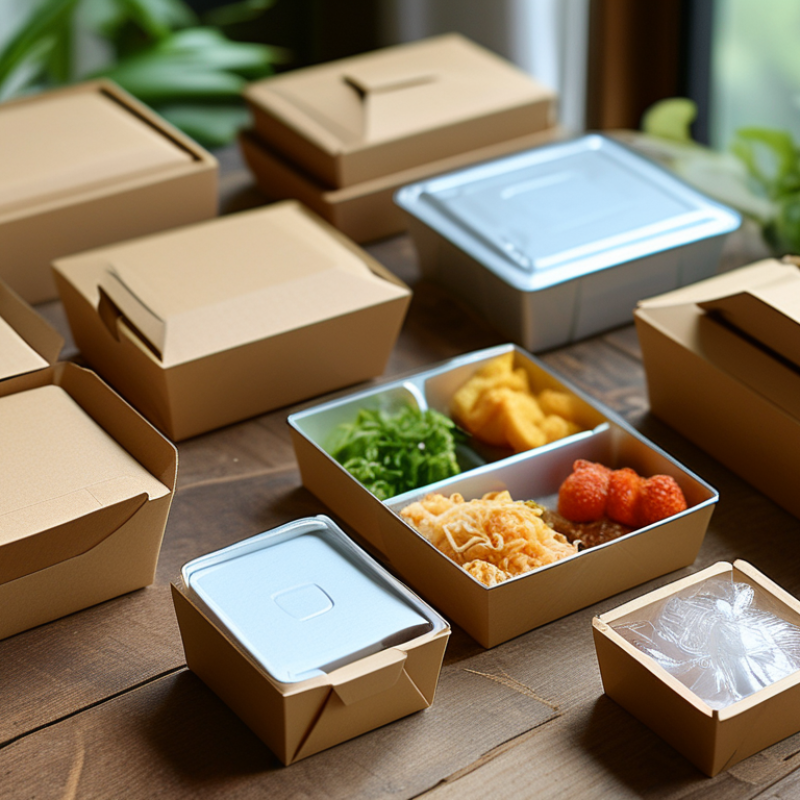
China Top Food Boxes Manufacturers for Global Buyers?

What Makes China a Leading Food Box Manufacturing Hub?

China has become a leading food box manufacturing hub because its supply chain is unusually complete. China Packaging Federation data placed the national packaging industry’s 2023 operating revenue above RMB 1.1 trillion. That scale supports paperboard mills, coating suppliers, printing plants, die-cutting workshops, and testing laboratories within practical reach. For global buyers, shorter supplier distances can reduce development time. They can also simplify sampling and production adjustments.

Demand is changing quickly. Smithers’ Future of Sustainable Packaging to 2028 report estimates the sustainable packaging market will grow from about US$274 billion in 2023 to nearly US$393 billion by 2028. Chinese manufacturers are responding with recyclable paper structures, water-based coatings, and lighter box designs. Some factories now use automated folding, vision inspection, and batch-level quality records. Small details matter. A box that opens cleanly protects food presentation and reduces packing labor.

However, production scale does not guarantee dependable results. A low quotation may hide weak moisture resistance, unstable board thickness, or incomplete migration testing. Buyers should review material specifications, food-contact documentation, compression results, and factory samples before approval. PMMI packaging research also highlights automation and sustainability as major investment priorities, but implementation quality differs between suppliers. This is where experience matters. I have found that a detailed tolerance sheet often prevents more trouble than a polished sales presentation. China remains highly competitive, though global buyers should keep questioning assumptions.

China Top Food Boxes Manufacturers for Global Buyers? - What Makes China a Leading Food Box Manufacturing Hub?

Food Box Category Common Materials Typical Applications Main Export Advantages Important Buyer Checks
Folding Cartons Food-grade paperboard, coated or uncoated board Dry food, bakery products, tea, snacks and retail packs Flat-packed shipment, efficient storage and broad printing options Paperboard grade, food-contact compliance, ink and coating suitability
Corrugated Food Boxes Corrugated fiberboard with kraft or recycled paper layers Food delivery, subscription boxes, produce and transport packaging Good cushioning, scalable production and suitable pallet utilization Board strength, moisture resistance, compression performance and recyclability
Molded Fiber Boxes Bagasse, bamboo fiber, recycled paper pulp or other plant fibers Takeaway meals, produce trays and protective food inserts Renewable-fiber positioning, stackability and reduced plastic use Fiber source, additives, grease resistance, compostability claims and migration testing
Paper Food Containers Paperboard with water-based, dispersion or polymer barrier coatings Soup, noodles, frozen food, salads and ready-to-eat meals Lightweight construction, customizable formats and efficient bulk shipping Hot-food performance, leak resistance, coating composition and recycling compatibility
Plastic Food Boxes Food-contact PP, PET, PE or other approved polymer materials Fresh food, chilled meals, sauces and reusable food storage Precise molding, clear visibility, strong sealing and format variety Resin identity, temperature limits, food-contact declarations and recycled-content rules
Aluminum Food Boxes Food-grade aluminum foil or formed aluminum sheet Baking, ready meals, catering and heat-resistant food service High heat tolerance, low weight and strong barrier against light and gases Alloy and thickness, lid compatibility, sharp-edge control and oven-use requirements
Rigid Gift and Specialty Boxes Rigid paperboard, specialty paper, food-safe inserts and optional transparent panels Confectionery, seasonal foods, premium snacks and gift assortments High visual impact, structural protection and extensive finishing choices Food-contact separation, adhesive safety, insert materials and packaging-waste requirements
Why China is a major food box manufacturing hub: China combines extensive paper, polymer, aluminum and fiber-processing capacity with mature converting equipment, integrated supply chains, flexible customization, export logistics and large-scale production. Global buyers should still verify applicable food-contact regulations, testing documents, factory quality systems, sustainability claims, minimum order quantities and shipping terms for each project.

How to Evaluate Food Box Manufacturers in China

How to Evaluate Food Box Manufacturers in China

Choosing a food box manufacturer in China requires more than comparing prices. A reliable evaluation starts with the box itself. Request samples made from the same paper, coating, ink, and adhesive used in production. Check for odor, grease resistance, leakage, edge strength, and print consistency. Fold the sample repeatedly. It should not crack easily.

Ask for current food-contact test reports and traceability documents. These records should match the exact materials and production site. Confirm whether testing applies to your target market, because requirements can differ between countries. A factory audit can reveal practical details, such as storage conditions, pest control, worker hygiene, and separation between raw materials and finished boxes. Photos help, but an independent inspection is stronger evidence.

Communication is also a useful test. Send a detailed specification sheet and observe how carefully the manufacturer responds. Do they clarify dimensions, temperature limits, packing methods, and delivery terms? Do not trust a low quotation without checking hidden costs, minimum order quantities, and replacement policies. No checklist is perfect. A polished factory can still miss a small detail, like a weak glued seam. That is why pilot orders and pre-shipment inspections remain valuable. Keep written records, approve a final sample, and review performance after real use.

Key Food Box Materials, Designs, and Customization Options

Choosing food boxes from China requires more than comparing prices.

Material selection affects freshness, strength, printing quality, and shipping performance.

Paperboard suits bakery items, takeaway meals, and dry snacks. Corrugated board offers stronger protection for larger or heavier products. Bagasse and other fiber-based materials can support a lower-plastic packaging strategy, but their moisture resistance needs careful testing.

Design should match the food, handling process, and customer experience.

A grease-resistant coating helps protect boxes from oily meals. Vent holes can reduce steam buildup in hot foods. Locking tabs save adhesive and speed up packing. Window panels improve product visibility, although they may reduce recyclability.

Small details matter.

A loose lid can damage the whole presentation.

Customization may include dimensions, board thickness, coatings, handles, inserts, and printed graphics.

Ask manufacturers for physical samples before approving mass production. Check odor, folding accuracy, compression strength, and surface scuffing.

Food-contact documentation, ink specifications, and production quality records should also be reviewed.

Test boxes under realistic conditions, including refrigeration, stacking, and delivery movement.

A box that looks excellent in a sample room may fail after two hours in a humid truck.

That uncomfortable finding is worth discovering early.

Reliable suppliers should explain material limitations clearly, not promise every feature without evidence.

Quality, Safety, and Certification Standards for Global Buyers

China’s food box manufacturers serve global buyers with paperboard, corrugated, and molded-fiber packaging. Quality begins with material control, not attractive printing. Ask for food-contact declarations, paper composition, ink details, and migration test reports. A reliable factory should identify production lots and retain inspection records.

Safety also depends on real production conditions. Check whether the facility separates raw materials from finished boxes. Confirm clean storage, pest-control records, and documented worker hygiene procedures. Useful systems may include HACCP, ISO 22000, or BRCGS certification. However, a certificate alone proves little. Verify its issuer, validity, certified site, and product scope. Standards can be misunderstood.

Tips: Request recent reports from accredited laboratories. Test grease resistance, moisture tolerance, compression strength, and odor transfer. Inspect samples after heating or refrigeration when relevant. Ask for a traceability exercise using one box lot. Small details matter. I have found that packaging failures often appear after shipping, not during factory inspection. Buyers should also confirm destination-market requirements before approving artwork or materials. A supplier may meet one country’s rules while missing another’s. Careful documentation reduces that risk.

How to Manage Pricing, Sampling, Shipping, and Supplier Selection

When sourcing food boxes from China, global buyers should treat price as a landed-cost question, not a factory quote. Request a tiered quotation for board grade, dimensions, printing, coating, tooling, packing, and payment terms. A box priced at $0.08 may become $0.14 after setup, inspection, and freight. Ask whether food-contact materials have current test reports from an independent laboratory. Also confirm production capacity during peak seasons. The cheapest offer can be the least predictable.

Sampling should follow your real product, not a generic white carton. Send the supplier a filled-size drawing, closure details, and target weight. Request a blank structural sample before paying for full-color prototypes. Check odor, edge strength, print alignment, grease resistance, and stacking performance. Place a chilled or oily item inside for 24 hours. Photographs help, but they do not replace physical inspection. One weak sample should slow the decision.

For shipping, compare courier, air, and sea options against delivery deadlines. Confirm carton dimensions, pallet count, Incoterm, export documents, and destination charges in writing. A low ocean rate may hide port handling or local delivery fees. Supplier selection needs more than a polished catalog. Review factory audit records, quality procedures, response speed, and reference orders with similar volumes. Use a small pilot order with written tolerances and an inspection checkpoint. I would not approve production from a single successful sample; humidity and batch changes can expose weaknesses. That caution costs time, but rushed packaging decisions cost more.

Need Packaging Solutions?

Get Free Estimate!

1-800-493-7441
Contact Us